
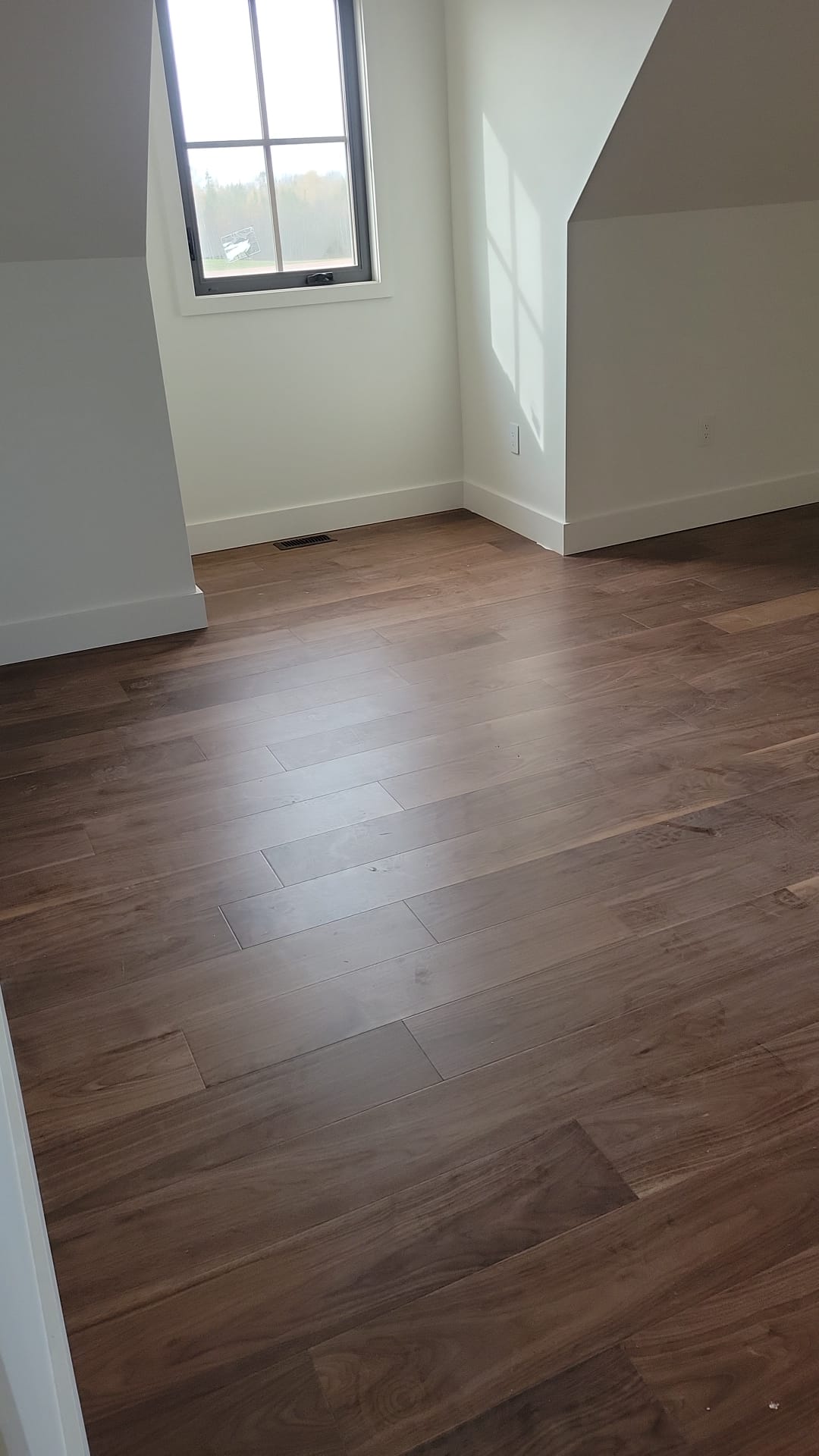
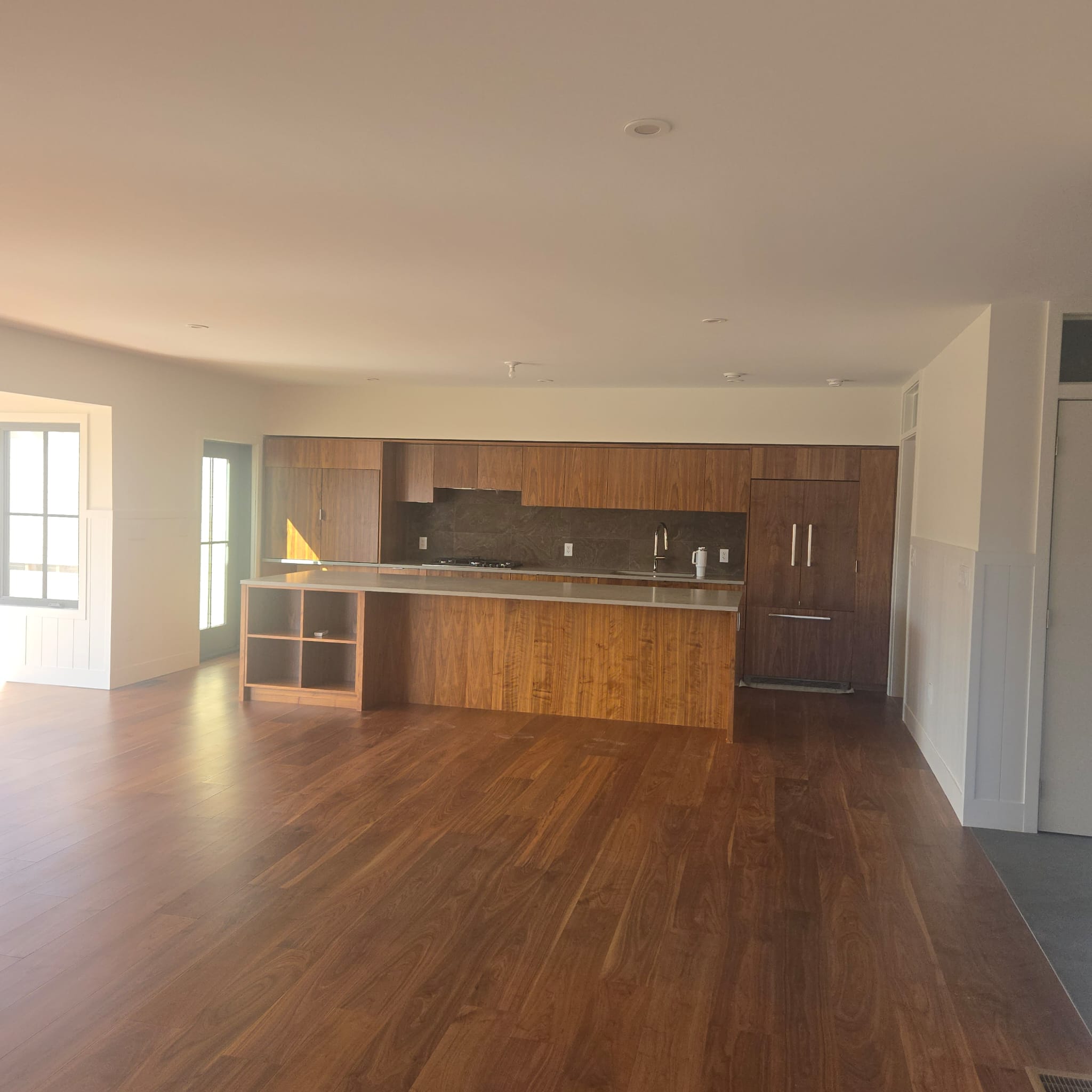
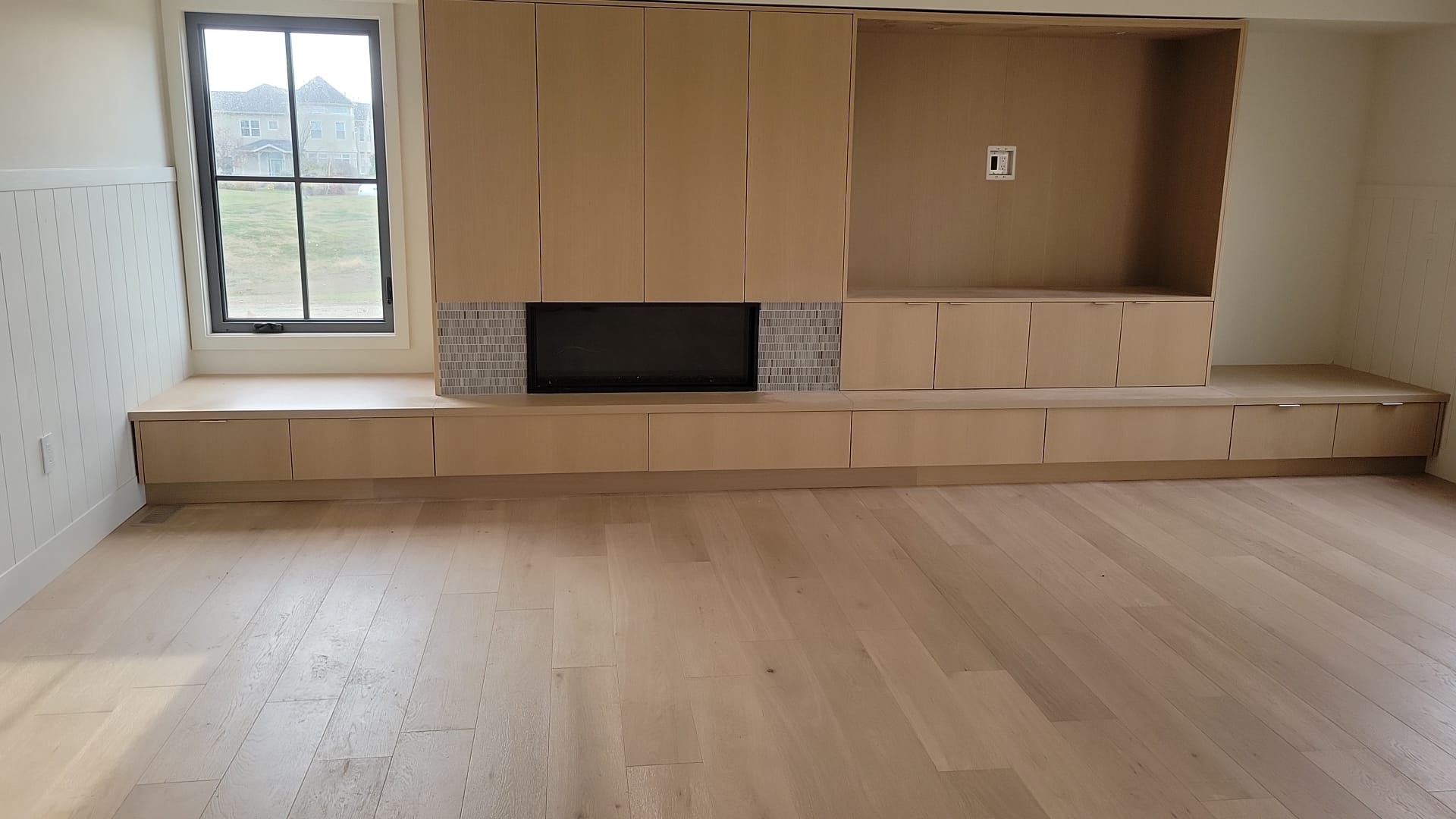
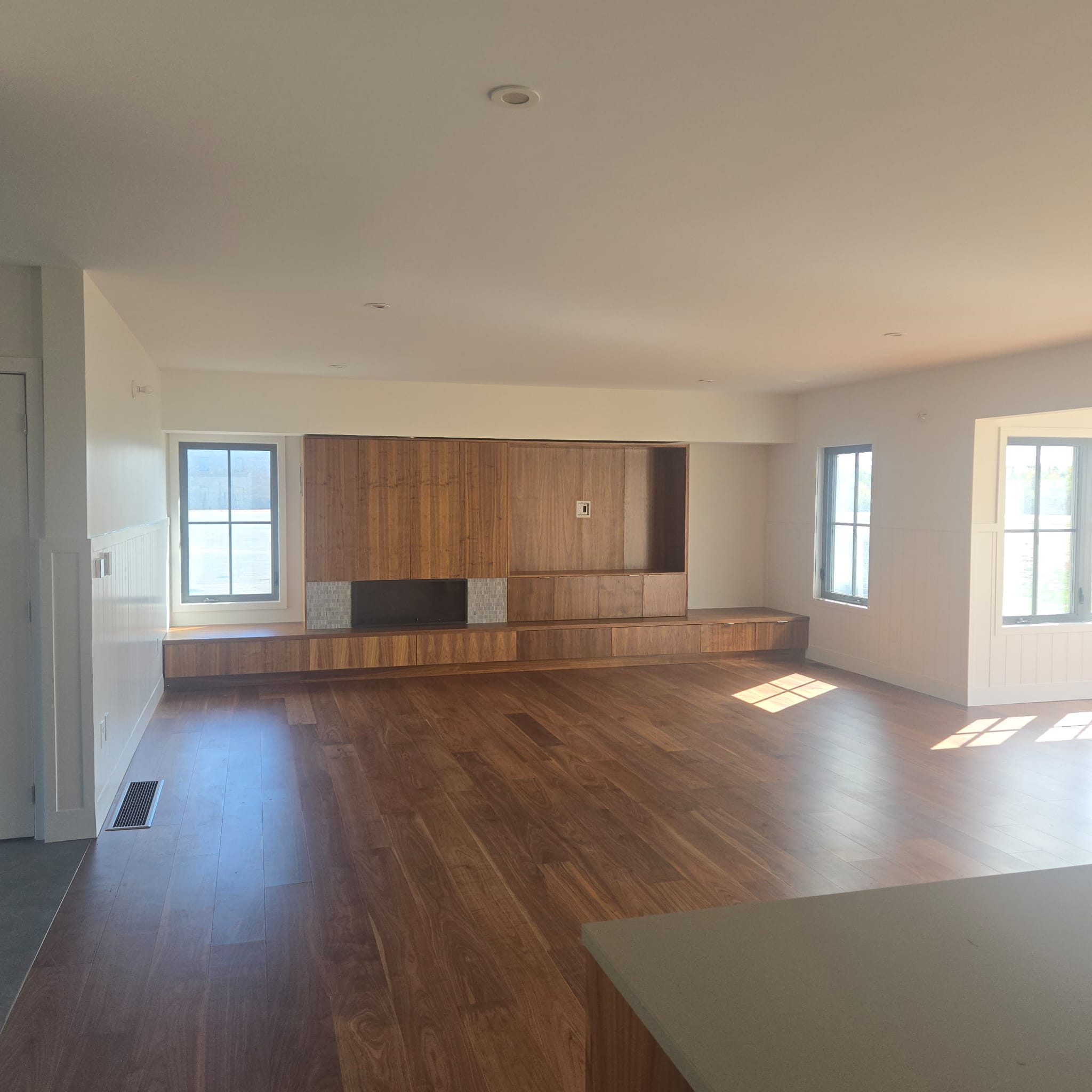
Transform your home with beautiful, durable engineered hardwood flooring from Asgard Construction. Our professional installation team delivers the timeless elegance of real wood with superior stability and performance. Whether you’re updating a single room or installing flooring throughout your entire home, we combine expert craftsmanship, quality products, and meticulous attention to detail to create stunning floors that last for decades.
What is Engineered Hardwood Flooring?
Engineered hardwood flooring features a multi-layered construction that provides the authentic beauty of real wood with enhanced stability and versatility. Unlike solid hardwood made from a single piece of timber, engineered hardwood consists of a top layer of genuine hardwood veneer (the wear layer) bonded to multiple core layers of plywood, high-density fiberboard (HDF), or softwood arranged in cross-directional layers.
This sophisticated construction method creates flooring that looks identical to solid hardwood when installed but performs significantly better in challenging environments. The top veneer layer ranges from 1mm to 6mm thick and showcases the natural beauty, grain patterns, and character of premium hardwood species. The cross-layered core provides dimensional stability that resists the expansion and contraction that affects solid wood.
The Benefits of Engineered Hardwood Flooring
Engineered hardwood has become the preferred choice for many homeowners, contractors, and designers due to its numerous advantages over solid hardwood.
Superior Dimensional Stability
The cross-directional layered construction makes engineered hardwood significantly more stable than solid wood, resisting warping, cupping, and gapping even in environments with fluctuating humidity and temperature. While solid hardwood expands and contracts noticeably with seasonal changes, engineered hardwood remains remarkably stable. This stability is the single most important advantage of engineered hardwood, allowing installation in locations where solid wood would fail.
Enhanced Moisture Resistance
Engineered hardwood’s layered construction provides much better resistance to moisture and humidity changes than solid hardwood. While no wood flooring is truly waterproof, engineered hardwood can handle moisture levels that would damage solid wood. High-quality engineered products feature moisture-resistant adhesives (D4 grade) between layers providing additional protection. This moisture resistance makes engineered hardwood suitable for basements, kitchens, bathrooms (with caution), and other areas where solid wood is not recommended.
Versatile Installation Options
Engineered hardwood offers unmatched installation flexibility with three primary methods: floating installation over underlayment, glue-down installation adhered to subfloor, and nail-down or staple-down installation to wood subfloors. This versatility allows installation over concrete slabs, existing floors, radiant heating systems, and various subfloor types. Different installation methods suit different applications, budgets, and skill levels. Solid hardwood, in contrast, requires nail-down installation to wood subfloors only.
Compatible with Underfloor Heating
Engineered hardwood’s dimensional stability makes it ideal for installation over radiant heating systems. The cross-layered construction handles temperature fluctuations without warping or gapping. Solid hardwood is not recommended for underfloor heating as temperature changes cause excessive movement. This compatibility opens design possibilities not available with solid wood.
Cost-Effective Beauty
Engineered hardwood delivers the authentic look and feel of premium hardwood species at significantly lower cost. The efficient use of materials—with only the visible top layer being premium hardwood—reduces material costs substantially. Installation costs are often lower due to easier, faster installation methods. You can afford exotic or premium wood species in engineered format that would be prohibitively expensive in solid form.
Wider Plank Options
The stability of engineered construction allows for much wider planks than solid hardwood. Engineered planks are commonly available 5-9 inches wide, with some products reaching 14 inches wide and 12-14 feet long. Wide planks create contemporary, dramatic looks with fewer seams and visual interruptions. Solid hardwood wider than 3-4 inches experiences significant seasonal gapping and movement.
Environmental Sustainability
Engineered hardwood uses wood resources more efficiently than solid hardwood. One cubic meter of wood produces approximately 150 square meters of engineered flooring compared to only 50 square meters of solid wood. The core layers utilize fast-growing, sustainable wood species while reserving premium hardwoods for the visible surface. This efficient resource use makes engineered hardwood a more environmentally conscious choice.
Extensive Design Variety
Engineered hardwood offers an incredible range of wood species, colors, grades, finishes, and plank sizes. Every style preference—from classic to contemporary, rustic to refined—has matching engineered options. The variety rivals or exceeds solid hardwood options while remaining more affordable. You can achieve any aesthetic vision from traditional to ultra-modern.
Easy Maintenance
Engineered hardwood requires minimal maintenance to stay beautiful. The factory-applied finish protects against scratches, stains, and fading. Regular sweeping and occasional damp mopping keep floors looking fresh. Many engineered products come with 7 layers of protective varnish or oil finish that outperform typical solid wood finishes. No waxing or special treatments required.
Long Lifespan with Refinishing Capability
Quality engineered hardwood with thick wear layers (3mm or more) can last 30-40 years or longer. Engineered floors with wear layers of 4mm or thicker can be sanded and refinished 1-2 times, extending their lifespan significantly. While this is fewer refinishing cycles than solid hardwood (which can be refinished 4-6 times), it still provides decades of beautiful service. The factory finish on engineered products often surpasses field-applied finishes on solid wood.
Engineered Hardwood vs. Solid Hardwood
Understanding the differences helps you choose the best flooring for your needs.
Construction and Composition
Solid hardwood consists of a single piece of timber throughout its entire thickness (typically 3/4 inch). Engineered hardwood features a real hardwood veneer top layer (1-6mm) over cross-layered plywood, HDF, or softwood core (total thickness 3/8″ to 3/4″). Both look identical when installed, but their construction determines performance.
Dimensional Stability and Moisture Performance
Solid hardwood expands and contracts significantly with humidity and temperature changes, limiting where it can be installed. It’s not suitable for basements, over concrete, in bathrooms, or with underfloor heating. Engineered hardwood’s cross-layered construction provides exceptional stability, resisting warping and gapping. It can be installed in basements, over concrete, in kitchens, and with radiant heating.
Installation Methods and Subfloors
Solid hardwood requires nail-down or staple-down installation perpendicular to joists on wood subfloors only. It must be installed above grade (not in basements). Engineered hardwood offers multiple installation methods (floating, glue-down, nail-down) over various subfloors including concrete. It can be installed on, above, or below grade.
Plank Width and Seasonal Gapping
Solid hardwood wider than 3-4 inches experiences noticeable seasonal gapping as humidity fluctuates. Planks contract in winter dry air and expand in summer humidity. Engineered hardwood remains dimensionally stable allowing wide planks (5-14 inches) with minimal gapping. Wide engineered planks create contemporary looks impossible with solid wood.
Longevity and Refinishing
Solid hardwood can last 100+ years and be refinished 4-6 times throughout its life. Engineered hardwood typically lasts 25-40 years with quality products featuring thick wear layers refinishable 1-2 times. While solid hardwood has longer potential lifespan, engineered hardwood provides decades of service with proper care.
Cost Comparison
Solid hardwood costs more for both materials and labor. Installation is more labor-intensive and time-consuming. Engineered hardwood offers more affordable materials and easier, faster installation reducing total costs. Budget-conscious projects benefit significantly from engineered hardwood’s cost advantage.
Resale Value Impact
Both solid and engineered hardwood add value to homes. Solid hardwood may command slightly higher resale premiums due to perception of premium quality. However, quality engineered hardwood installed in appropriate locations (like basements where solid cannot go) adds significant value. Buyers increasingly appreciate engineered hardwood’s practical benefits.
Engineered Hardwood Installation Methods
Professional installation using the appropriate method ensures optimal performance and longevity.
Floating Installation Method
Floating installation connects planks to each other without attaching them to the subfloor, creating a single floating unit. Planks typically feature click-lock mechanisms that interlock securely. The entire floor rests on underlayment over the subfloor.
Floating installation advantages include easiest DIY installation method, works over various subfloors including concrete, allows natural expansion and contraction, and can be removed and reinstalled if needed. Considerations include may feel slightly less solid than attached methods, requires perfectly level subfloor, and works best with thinner engineered products (3/8″ to 1/2″).
Floating installation process starts with proper subfloor preparation ensuring it’s clean, level, and dry. Underlayment is rolled out in the direction of plank installation. First row begins in a corner with groove side to wall, leaving 1/2″ expansion gap. Subsequent rows interlock by inserting tongue into groove at an angle and pressing down to lock. End joints stagger by at least 12 inches between rows. Final rows are cut to fit with proper expansion gaps maintained.
Glue-Down Installation Method
Glue-down installation adheres planks directly to the subfloor using specialized flooring adhesive. Adhesive is spread with trowel and planks are placed before it sets.
Glue-down installation advantages include highly stable, solid feel underfoot, ideal for concrete subfloors and radiant heating systems, reduces noise transmission, and provides excellent long-term stability. Considerations include more challenging than floating installation, requires careful planning as repositioning is difficult, needs adequate working time with adhesive, and may require professional installation for best results.
Glue-down installation process requires meticulous subfloor preparation—clean, level, dry, and properly primed. Working adhesive is spread with appropriate trowel size in manageable sections. Planks are carefully placed in adhesive following layout plan. Gentle tapping with rubber mallet ensures full adhesive contact. Excess adhesive is cleaned immediately before it sets. Floor is rolled with heavy roller to ensure complete adhesion. Adequate cure time (typically 24-48 hours) is allowed before use.
Nail-Down or Staple-Down Installation
Nail-down installation fastens planks to wood subfloors using pneumatic nailers or staplers. Fasteners penetrate through the tongue at an angle, hidden from view.
Nail-down installation advantages include extremely secure attachment, traditional method preferred by professional installers, allows easy board replacement if needed, and provides excellent stability. Requirements include wood subfloor only (plywood or OSB over joists), tongue-and-groove planks (not click-lock), sufficient thickness (typically 1/2″ or thicker), and specialized pneumatic tools.
Nail-down installation process starts with subfloor preparation and moisture testing. First rows are face-nailed near walls (covered by trim). Subsequent rows are blind-nailed through the tongue using proper fastener size and spacing (every 4-6 inches and 2-3 inches from ends). End joints stagger at least 8 inches between rows. Planks are seated firmly together before fastening. Final rows may require face nailing where nailer doesn’t fit.
Our Engineered Hardwood Installation Process
At Asgard Construction, we follow a comprehensive process ensuring exceptional results.
Initial Consultation and Product Selection
Every successful flooring project begins with understanding your needs and vision. During consultation, we discuss your lifestyle and room usage, design preferences and aesthetic goals, budget parameters, subfloor conditions and location (above/on/below grade), and specific performance requirements (pets, heavy traffic, moisture concerns). Our flooring experts help you select ideal engineered hardwood products from our extensive range of wood species, colors, finishes, and plank sizes. We provide samples so you can see how products look in your space with your lighting and existing décor.
Subfloor Assessment and Preparation
Proper subfloor preparation is absolutely critical for successful installation. Our team conducts detailed assessment checking subfloor type (wood, concrete, existing flooring), levelness (variations exceeding 3/16″ over 10 feet require correction), moisture content (moisture testing on all substrates, especially concrete), structural integrity and stability, and cleanliness. We prepare subfloors by removing old flooring materials if necessary, repairing any damage or weak spots, leveling uneven areas with appropriate compounds, installing moisture barriers where needed, and thoroughly cleaning all surfaces. This meticulous preparation prevents common problems like cupping, buckling, and premature wear.
Acclimation
Engineered hardwood should acclimate to your home’s temperature and humidity before installation. We deliver flooring 48-72 hours prior to installation, allowing it to adjust to room conditions. During acclimation, we finalize the installation plan determining optimal starting point and direction, planning layouts to minimize waste and maximize aesthetics, calculating expansion gaps required, and mixing planks from different cartons to blend any color variations.
Professional Installation
Our skilled installers execute installation with precision and attention to detail using the appropriate method for your specific product and subfloor. Throughout installation, we maintain required expansion gaps around all perimeters and fixed objects (typically 1/2″), stagger end joints properly for strength and aesthetics (minimum 8-12 inches), check for levelness and proper engagement throughout, cut planks precisely around obstacles and transitions, and ensure consistent, professional appearance. Our team works efficiently while maintaining the highest quality standards.
Transitions and Finishing
Completing installation properly ensures professional appearance and protects your investment. We install transition strips between different flooring types, reducers at doorways and step-downs, T-moldings for long expanses or room connections, and baseboards or quarter rounds to cover expansion gaps. All trim work is carefully installed to allow for floor movement while providing polished, finished appearance.
Final Inspection and Care Instructions
Before considering any project complete, we conduct thorough inspection verifying proper installation throughout, checking all transitions are secure, ensuring adequate expansion gaps are maintained, confirming all cuts are clean and precise, and verifying overall appearance meets your expectations. We provide detailed care and maintenance instructions helping you protect your investment and keep your engineered hardwood flooring looking beautiful for decades.
Engineered Hardwood Maintenance and Care
While engineered hardwood is remarkably low-maintenance, following proper care guidelines ensures lasting beauty.
Daily and Weekly Cleaning
Regular maintenance is simple and straightforward. Sweep or vacuum regularly using soft bristle attachment to remove dirt and debris. Damp mop weekly or as needed with pH-neutral hardwood floor cleaner—avoid excessive water. Wipe up spills immediately to prevent potential staining. Use doormats at entrances to trap dirt and moisture. Never use steam cleaners, harsh chemicals, or abrasive cleaners that could damage the finish.
Preventive Care
Simple precautions protect your flooring investment. Use felt pads under furniture legs to prevent scratches and dents. Place protective mats under rolling office chairs. Keep pet nails trimmed to minimize scratch potential. Use area rugs in high-traffic areas for added protection. Maintain consistent humidity levels (35-55%) for optimal performance. Minimize direct sunlight exposure with window treatments to prevent fading. These measures keep floors looking new longer.
Long-Term Care
With minimal effort, your engineered hardwood maintains its beauty for decades. Periodically clean with recommended hardwood floor cleaner following manufacturer instructions. For products with thick wear layers, professional refinishing may be possible once or twice during the floor’s lifetime to refresh appearance. Follow manufacturer’s specific care recommendations to maintain warranty coverage. Address any damage promptly—individual planks can often be replaced if needed.
Why Choose Asgard Construction for Engineered Hardwood Installation
When you choose Asgard Construction, you partner with experienced professionals committed to excellence.
Engineered Hardwood Expertise
Our installation team brings extensive experience with all engineered hardwood products, installation methods, and subfloor types. We understand the unique characteristics of engineered flooring and use appropriate techniques for lasting performance. Our installers stay current with manufacturer requirements and industry best practices.
Quality Product Selection
We partner with leading engineered hardwood manufacturers offering premium products at competitive prices. Our product selection includes top brands and latest innovations in engineered flooring technology. We provide expert guidance on selecting products matching your needs, style, and budget.
Meticulous Installation Standards
We take pride in precision workmanship evident in every detail. Subfloor preparation meets or exceeds manufacturer standards. Installation follows proper techniques for the specific method and product. Transitions and finishing work are executed with care. Final inspection ensures nothing is overlooked.
Customer-Focused Service
Your satisfaction drives everything we do. Clear communication keeps you informed throughout your project. Punctual, respectful crew members treat your home with care. Thorough cleanup leaves your space ready to enjoy. Responsive support answers questions and addresses concerns.
Get Started with Your Engineered Hardwood Flooring Project
Transform your home with beautiful engineered hardwood flooring from Asgard Construction. Whether you’re updating a single room or installing flooring throughout your entire home, our team has the expertise to deliver outstanding results.
Contact us today for a free consultation and estimate. We’ll discuss your project goals, show you our extensive engineered hardwood options, and provide a detailed proposal outlining scope, timeline, and investment. Let us show you why homeowners throughout the region trust Asgard Construction for all their engineered hardwood flooring needs.