
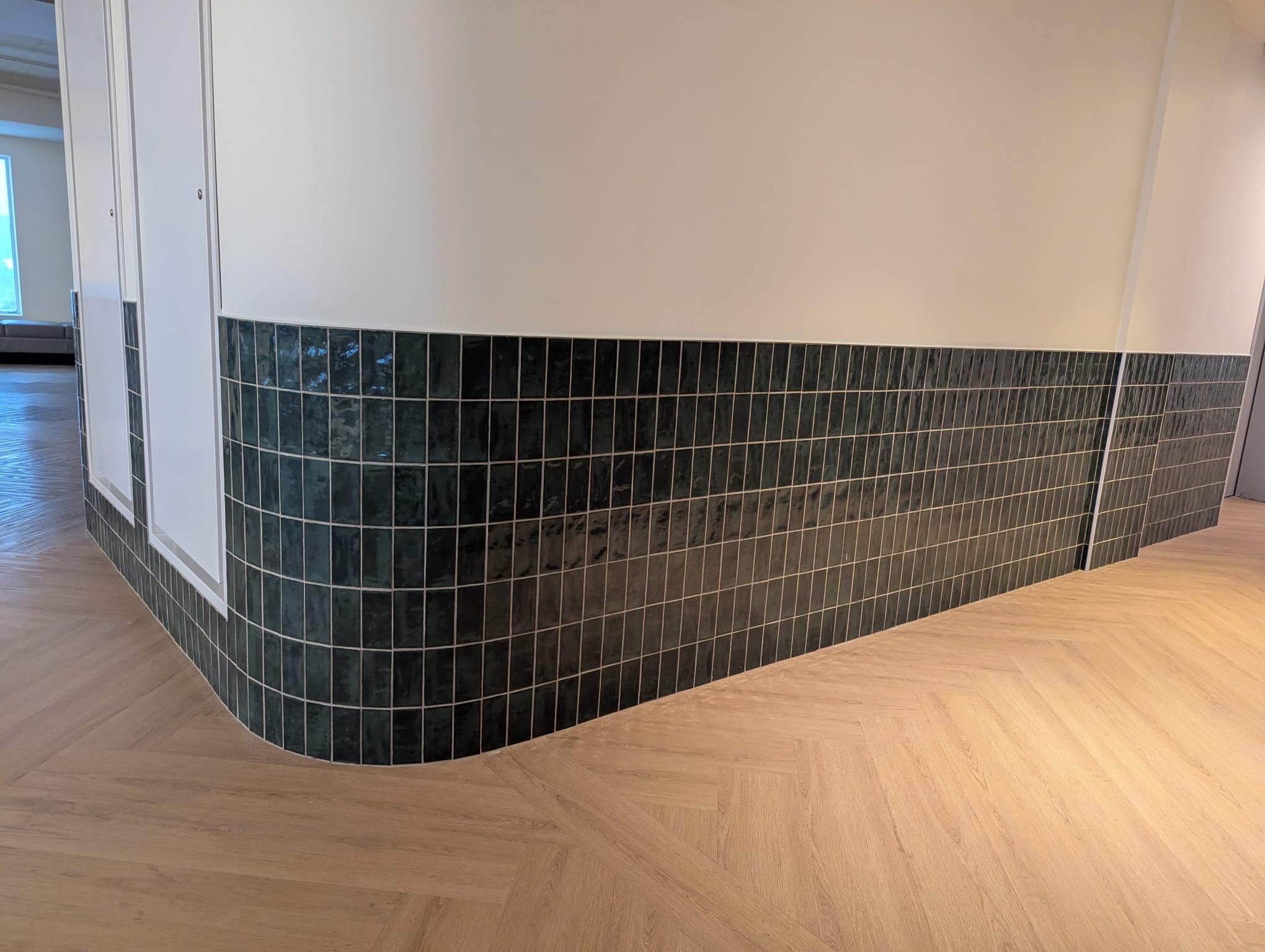
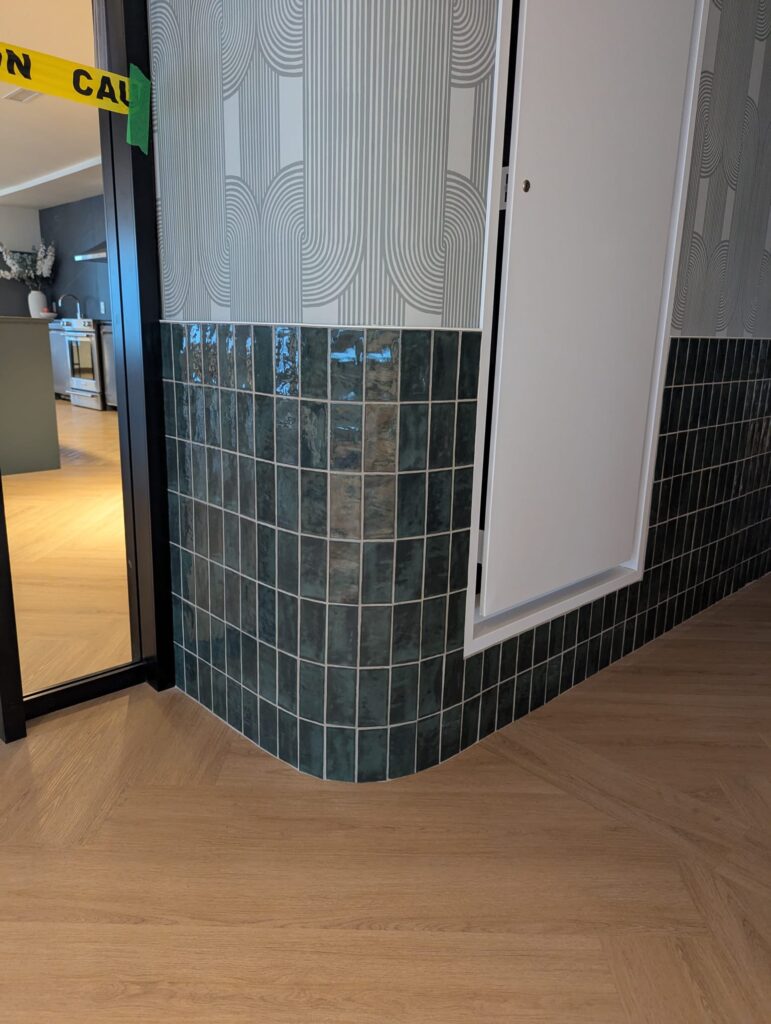
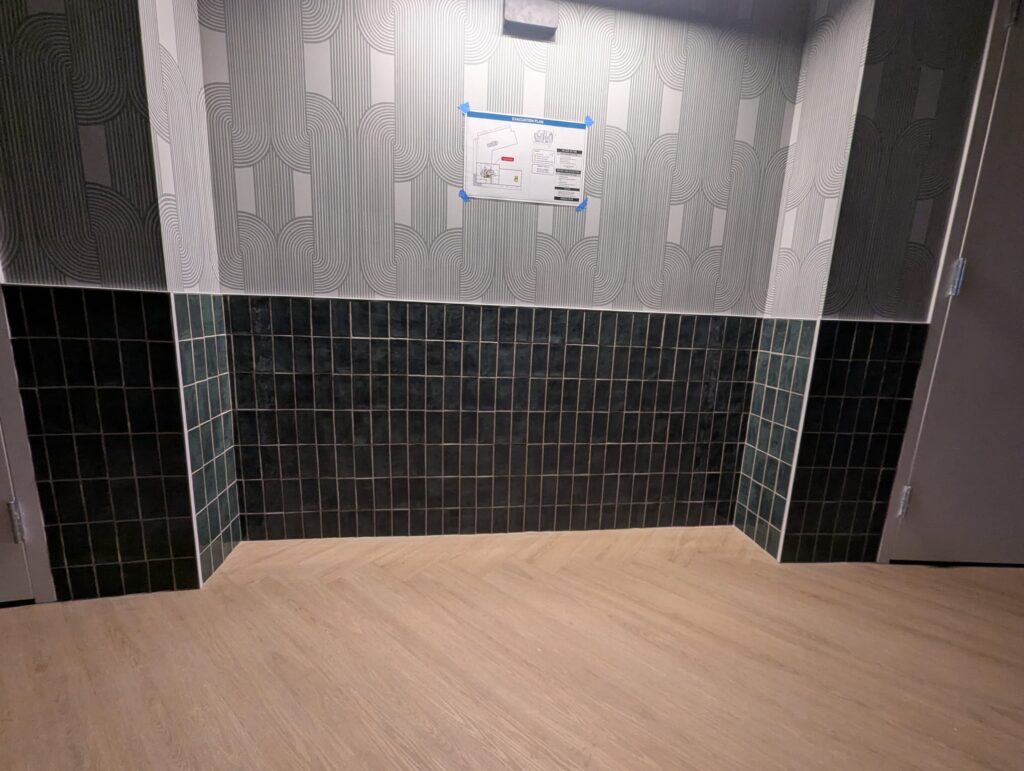
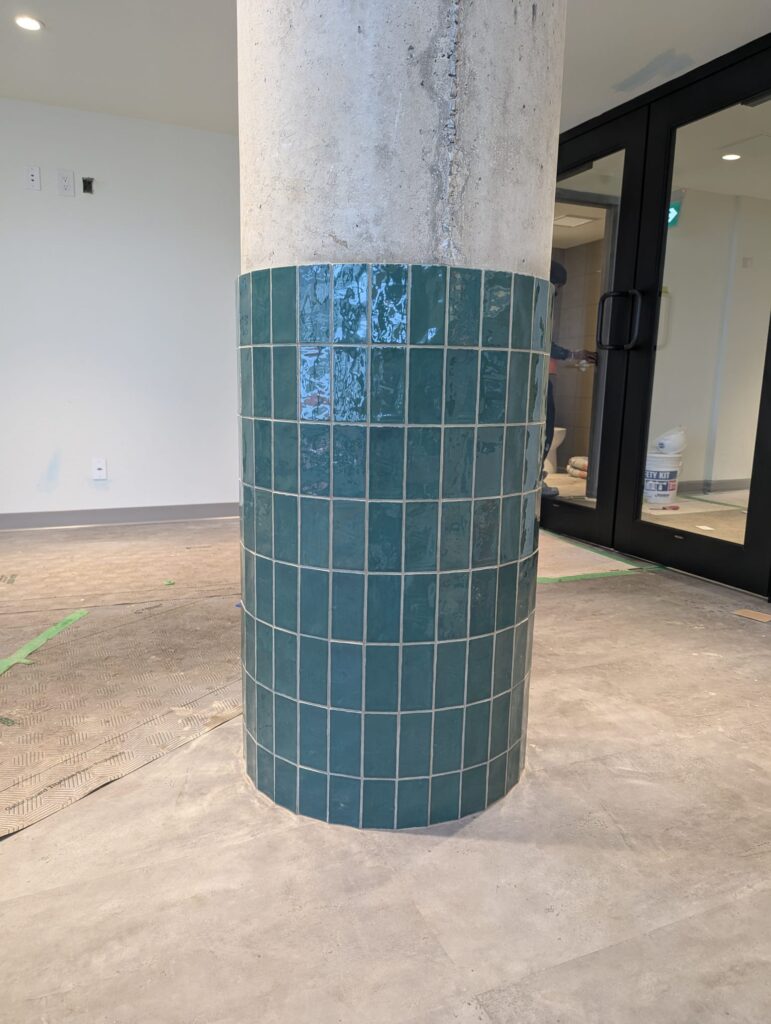
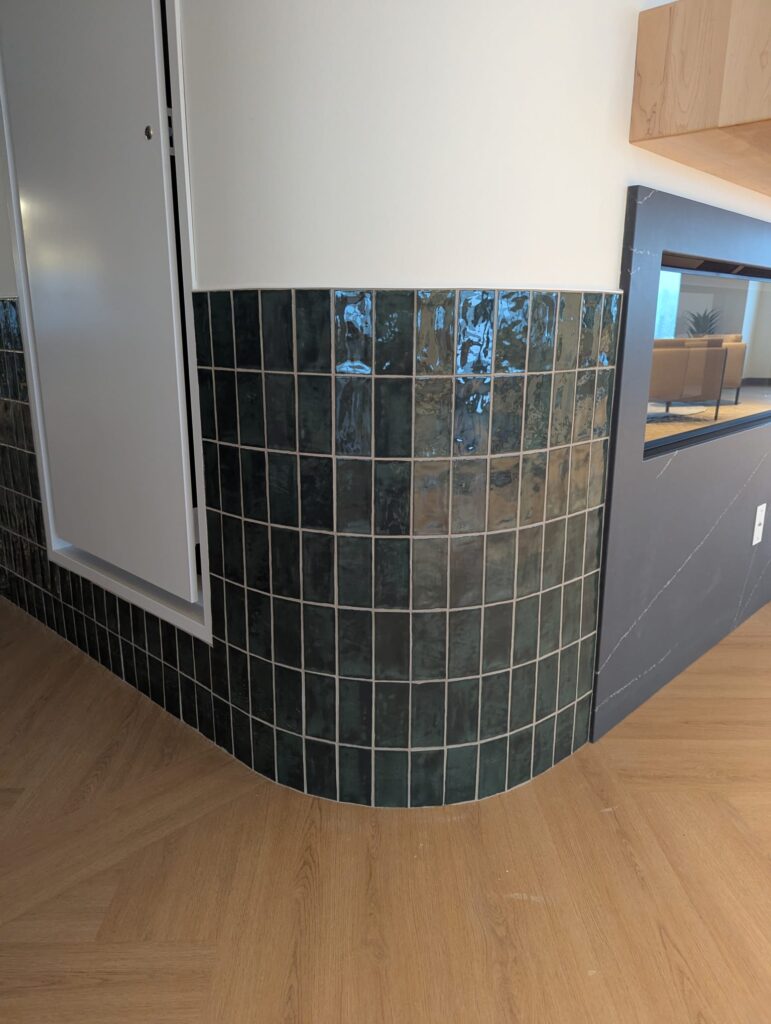
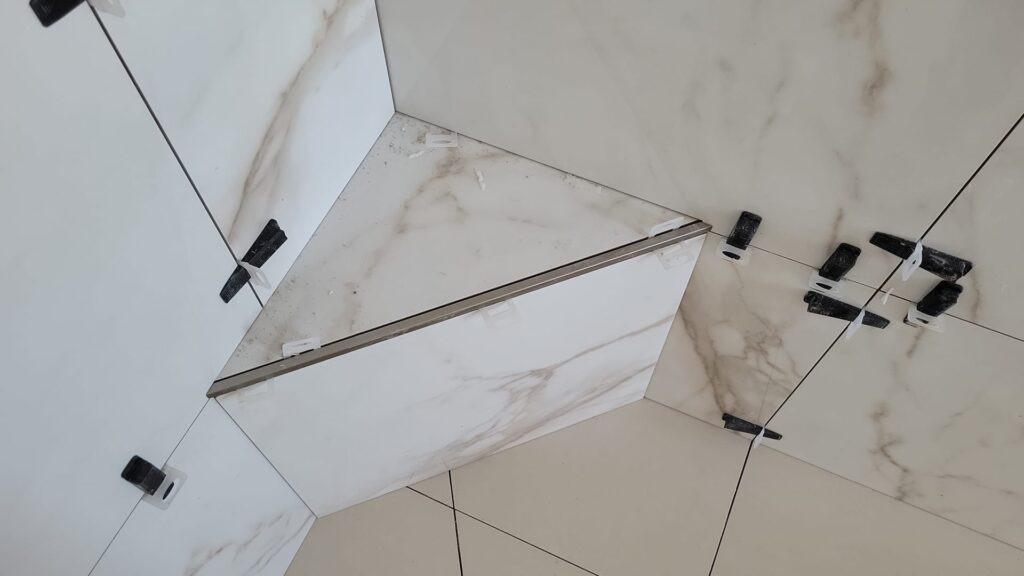
In real-world construction, not every space is perfectly designed for tile installation. Hallways, lobbies, curved walls, tight corners, uneven surfaces, and structural obstacles often make standard tiling methods difficult—or even seem impossible.
But experienced contractors know: there is always a solution.
In this article, we’ll explain how complex tiling challenges are solved from a technical perspective—and how creative problem-solving can turn difficult areas into standout design features.
Why Some Areas Are Difficult for Tile Installation
Before solving the problem, it’s important to understand why certain spaces are challenging.
Common issues include:
Irregular layouts or non-90° angles
Columns, niches, and architectural features
Uneven subfloors or walls
Limited working space (tight hallways, entry areas)
Transitions between different materials
High-traffic requirements (especially in lobbies)
In places like building lobbies or corridors, tile must not only look good—but also withstand heavy daily use.
Our Approach: Technical Problem-Solving + Custom Design
When standard installation methods don’t work, we develop custom solutions based on the specific conditions of the space.
- Detailed Site Assessment
Every successful project starts with precise measurements and evaluation.
We analyze:
Surface level and structural condition
Moisture exposure
Foot traffic load
Existing materials and transitions
This allows us to anticipate problems before installation begins. - Surface Preparation and Leveling
In many cases, the issue is not the tile—it’s the surface.
Technical solutions include:
Self-leveling compounds for uneven floors
Custom mortar bed adjustments
Wall straightening systems
Reinforcement for weak substrates
Proper preparation ensures durability and prevents cracking. - Custom Tile Cutting and Layout Design
Complex spaces require precise cutting and thoughtful layout planning.
What we do:
Use advanced tile cutting tools for detailed shapes
Adjust tile patterns to fit irregular geometry
Align visual lines to maintain aesthetic consistency
Instead of forcing tiles into the space, we adapt the layout to work with the architecture. - Creative Design Solutions for Lobbies and Hallways
Lobbies are one of the most challenging—and most visible—areas.
When standard tiling is not feasible, we apply creative strategies:
Examples:
Feature borders to handle uneven edges
Mixed materials (tile + vinyl + stone transitions)
Decorative inserts or patterns to disguise cuts
Expansion joints integrated into design
These solutions don’t just fix problems—they often improve the final look. - Working Around Obstacles
Columns, pipes, door frames, and built-in elements can complicate installation.
Our approach:
Precision cutting around obstacles
Flexible trim and edge profiles
Seamless integration with surrounding materials
The goal is a clean, professional finish—even in the most complicated areas. - Durability in High-Traffic Areas
Hallways and lobbies require more than good design—they need strength.
We prioritize:
High-grade adhesives
Proper expansion joints
Slip-resistant tile where required
Long-lasting grout systems (e.g., epoxy)
This ensures the installation performs well for years.
When Tile Truly Isn’t the Best Option
Sometimes, the smartest solution is not to force tile where it doesn’t belong.
In extremely complex areas, we may recommend:
Luxury vinyl (LVP/LVT)
Polished concrete
Hybrid material designs
The key is choosing the right material for the space—not just the original plan.
Real Value: Experience and Creativity
The difference between a basic installer and an experienced professional is the ability to solve problems on-site.
Complex spaces require:
Technical knowledge
Precision tools
Creative thinking
Attention to detail
That’s where we bring value—by turning “impossible” areas into clean, functional, and visually appealing results.
Conclusion
Difficult spaces are a reality in construction—but they don’t have to limit your design.
With the right approach, even the most challenging hallway or lobby can be transformed into a high-quality, durable, and attractive space.
If a project looks complicated, it doesn’t mean it can’t be done—it just means it needs the right solution.